Monday, October 29, 2012

Sunday, October 21, 2012
Monday, September 10, 2012
Wednesday, August 22, 2012
Tuesday, August 21, 2012
Friday, August 17, 2012
Wednesday, June 6, 2012
Wednesday, May 30, 2012
Thursday, May 10, 2012
WAVES - FINAL UNIT OF THE YEAR
After watching this video why do you think the sand rearranges itself the way it does?
Friday, May 4, 2012
Wednesday, May 2, 2012
Study guide for chapter 5 and 6 test
What is momentum?
Tuesday, April 24, 2012
Monday, April 23, 2012
Saturday, April 21, 2012
Friday, April 13, 2012
MOONKAM
Our first images of the moon are coming back. If you need more codes let me know at jsneideman@tarbut.com

| Photo ID | 52673 |
| School | tarbutv1 |
| Time Taken (UTC) | 2012/096/11:38:13 |
| Orbit | 1274 |
| Spacecraft | Ebb |
| Camera Direction | Backward |
| Lens (mm) | 6.00 |
| Altitude (km) | 48 |
| Frame Width (km) | 0.00 |
| Frame Height (km) | 48.23 |
| Nadir | 61.54° S, 61.71° W |
| Center | 58.5° S, 62.89° W |


h

ttp://images.moonkam.ucsd.edu/v/MK12_03/1177_0T840TA600000_37886_2012-088-21_13_42_000_2012-088-21_13_58_508.bmp.html
Thursday, March 8, 2012
Rubric for Rover Project
- Fastest Acceleration (3 trials average)
- Furthest Distance Traveled (3 trials average)
- Top Average Speed (3 trials average)
- Vote for Best Design
PHASE I. DESIGN PHASE | Pts | CRITERIA | ||||
Mission statements | 20 | · Statement of purpose · Goals of mission are clear and accurate · List and explanation of scientific instruments to be used | ||||
Work log /Blog** | 20 | You keep track of your daily accomplishments, learning, and individual work done – signed off by team leader and/or teacher (photo log on team blog is evidence of work done) | ||||
Design of rover | 30 | · List of materials included · 3 views of your design (top, side, oblique) · Labeled parts · Design includes logo · Includes scientific instruments · TO SCALE** | ||||
Slogan/Logo | 20 | · Creative, appropriate, relevant, colorful and DIGITAL – · Included on your blog · Theme song ** | ||||
Kindergarten Project 1 | 20 | · You have something prepared for your kindergarten team members to work on when you present the topic. (coloring which will be included on the final project) | ||||
PHASE II. BUILDING PHASE | ||||||
Building (daily grade) | 20 | Points will be taken off of the entire team members are idle. Needs to be evidence of progress daily. | ||||
Finished design resembles design | 20 | The percent similarity of your prebuilding design and your finished project. | ||||
Finished project | 50 | · Solidly built – not falling apart · creativity · Moves down a hill by the force of gravity and or with a push · | ||||
Presentation to the board | 50 | · 3-5 minute presentation · Clearly demonstrates knowledge about | ||||
Kindergarten Project 2 | 20 | TBA | ||||
PHASE III. EXPERIMENTING PHASE | |||
Newton’s Law Lab | 50 | TBA | |
Lab Report | 50 | Complete lab report : Includes all sections from lab rubric | |
Finished **Blog of Progress | 50 | TBD | |
Kindergarten Project 3 | 20 | Presentation | |
Other | |||
Tuesday, February 14, 2012
Study Guide Chapter 19
Essay: Explain the cuases of the seasons in detail. Give examples using the Poles and Tropic Lines.
Spectrum Apparent magnitude Absolute magnitude Light-year Parallax H-R diagram Main sequence White dwarf Red giant Supernova Neutron star Pulsar Black hole Galaxy Spiral galaxy Elliptical galaxy Irregular galaxy Nebula Open cluster Globular cluster Quasar Gibbous Crescent Waxing Waning Solstice Equinox Aphelion Perihelion Angular Heigth of the Sun |
Do Now: Stars Spectra
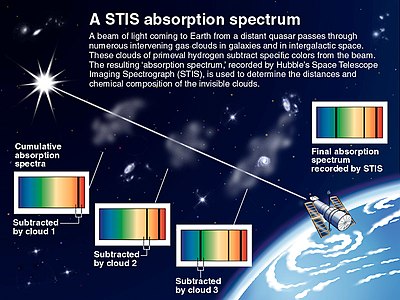
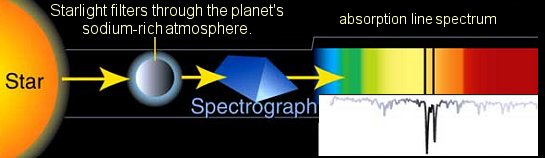
Sources of continuous, emission, and absorption spectra
 |
| Sources of continuous, emission, and absorption spectra |
http://csep10.phys.utk.edu/astr162/lect/light/absorption.html
Thus, emission spectra are produced by thin gases in which the atoms do not experience many collisions (because of the low density). The emission lines correspond to photons of discrete energies that are emitted when excited atomic states in the gas make transitions back to lower-lying levels.
A continuum spectrum results when the gas pressures are higher. Generally, solids, liquids, or dense gases emit light at all wavelengths when heated.
An absorption spectrum occurs when light passes through a cold, dilute gas and atoms in the gas absorb at characteristic frequencies; since the re-emitted light is unlikely to be emitted in the same direction as the absorbed photon, this gives rise to dark lines (absence of light) in the spectrum.

Monday, February 13, 2012
Friday, January 20, 2012
Blogging in Class
Blogging
Uses: Projects, journals, embed videos, keep track of conversations, post news articles, post homework, post review sheets, etc.
www.blogger.com (blogger is accessed through your gmail account. If you have a gmail then you can just login as yourself. If you don't then I have created an account for you.) When I use blogs in class, I have all students use a gmail account that I have created just for the purpose of the project – this gives me control over the content such that if an issue ever arose, I could go in and edit or delete a blog )
login: tvtscience2@student.tarbut.com
password – tvtentropy
Post Vs. Page – both can be changed at any time using the pencil or edit.
*you can also change the order of your posts by editing just the date box.
-posts move down the page in chronological order each new post at the top.
-Pages are static entities that in senescence act as a single post. They can be edited to make additions or changes whenever you like.
How to make a new page
Click – new post – then edit pages – then new page – then it asks you to name a location – I like my pages at the top of the page.
How to make a new post – click new post –
There is a edit HTML tab and a compose tab – when working in word click the compose tab. When working with embedding video click the edit HTML tab to copy and paste-
Embedding a YouTube Video
To embed a video from YouTube, just follow these simple steps:
- Click on the "Share" button underneath the YouTube video.
- Select "Show more," and then click on the Blogger icon.
- Depending on whether or not you're signed in to your blog, you might have to enter in your username and password in the new window that pops up.
- At the top of the new window, choose the blog you would like to post to from the drop-down menu.
- Publish your post!
*THIS IS THE METHOD I USUALLY USE***
Alternatively, you can copy the embed code and paste it into your blog. Just click on "Share" and then on "Embed" to find the embed code. Copy the code, then paste it into your blog while on the "Edit HTML" tab (as opposed to the "Compose" tab).
Posting pictures
You can now upload photos to your blog(s) using Blogger Images; just click the image icon in the post editor's toolbar.
When you click this icon, you'll get a window that allows you to select an image or multiple images from your computer. Click the Browse button to locate the ones you want. Alternatively, you can enter the URL of an image that's already online and insert it into your post.
If you click the link to choose a layout, you can customize the way your images will appear in your post:
The left, center and right options determine how the text of your post flows around the pictures. The size option lets you scale the pictures to different sizes within this posting area. Note that the picture will still be uploaded in its full size; this option just determines how it's scaled within the content of your post.
Adding an RSS Feed:
RSS stands for really simple syndication – they are generally sites that are updated regularly.
In the design tab – choose add a gadget – then scroll down to the RSS Feed gadget.
Copy and paste in the address for the RSS feed. Ex: Science News Daily –
RSS feeds normally look like one line of a web address.
You could always Google search your topic and RSS
WORKING DIRECTLY FROM WORD Document without ever having to log in. You can also open old files and just send them directly to your blog.
On word when you choose FILE NEW- you can choose blogpost.
- Choose manage accounts – enter the data necessary to have your accounts accessible from word. You can just post straight from word. WORD!
- All you need do is copy and paste the document into a blogpost and click submit
Ideas for blogs:
Post homework, review sheets | Post videos and have students comment | Post student work | Post interesting photos of art and have students comment | Post youtube videos of different parts of a song | Post garage band performances | Post links for research projects | Post math word problem of the day |
Post photographs from classroom reenactments | Post links to current events | Post links to podcasts about a certain topic | Have students keep a journal about…. | Have students keep their science log about…. | Have students create a awareness about….. | Have students collaborate about….. |
Notes:
Wednesday, January 18, 2012
Study Guide
Study Guide for Test on Chapter 17 and 18
- Know the vocab
- Study the Do Nows
- Review all the homework questions – section reviews
- Practice the chapter tests at end of chapter 17 and 18
Understand: sunrise, sunset, moonrise, moonset,
Be able to draw both types of eclipse
New Vocab:
Latitude
Longitude
Prime Meridian
Equator
Tropic of Cancer
Tropic of Capricorn
Arctic Circle
Oort Cloud
Kuiper Belt
Identify key ideas about the planets:
What is unique about venus's atmosphere?
What is unique about certain Jovian Moons?
Know the order of the planets.
Which planet has a strange tilt to its axis of rotation?
Why do the periods of revolution increase away from the sun but not the period of rotation?
Big Bang
What is the big bang? Explain its meaning and significance-
What happened right after the big bang? Can anything travel faster than the speed of light?
What is the speed of light? What is a light year?
Explain theory for the formation of our solar system and the formation of our moon.
Honors:
Be able to do black hole math for radius of a black hole
Be able to calculate using speed of light and AU
What is a black hole and what are the unique characteristics of them? How many are there out there in space? Can black holes combine? What is a supermassive black hole? How big would the black hole be made by something with the mass of our Sun, our Earth, or a 100 Kg human?
Sunday, January 8, 2012
Vocabulary Chapter 17 and 18
Wednesday, January 4, 2012
MOONKAM Mission Page for non members.
 Artist's concept of the GRAIL mission. Image credit: NASA/JPL-Caltech
 The GRAIL mission will place two spacecraft into the same orbit around the Moon. As they fly over areas of greater and lesser gravity, caused both by visible features such as mountains and craters and by masses hidden beneath the lunar surface, they will move slightly toward and away from each other. An instrument aboard each spacecraft will measure the changes in their relative velocity very precisely, and scientists will translate this information into a high-resolution map of the Moon's gravitational field.
This gravity-measuring technique is essentially the same as that of the Gravity Recovery And Climate Experiment (GRACE), which has been mapping Earth's gravity since 2002.
Objectives
GRAIL's engineering objectives are to enable the science objectives of mapping lunar gravity and using that information to increase understanding of the Moon's interior and thermal history. Getting the two spacecraft where they need to be, when they need to be there, requires an extremely challenging set of maneuvers never before carried out in solar system exploration missions. Mission design
The two GRAIL spacecraft will be launched together and then will fly similar but separate trajectories to the Moon after separation from the launch vehicle, taking about 3 to 4 months to get there. They will spend about 2 months reshaping and merging their orbits until one spacecraft is following the other in the same low-altitude, near-circular, near-polar orbit, and they begin formation-flying. The next 82 days will constitute the science phase, during which the spacecraft will map the Moon's gravitational field.
Spacecraft and payload
The two GRAIL spacecraft are near-twins, each about the size of a washing machine, with minor differences resulting from the need for one specific spacecraft (GRAIL-A) to follow the other (GRAIL-B) as they circle the Moon.
The science payload on each spacecraft is the Lunar Gravity Ranging System, which will measure changes in the distance between the two spacecraft down to a few microns -- about the diameter of a red blood cell. Each spacecraft will also carry a set of cameras for MoonKAM, marking the first time a NASA planetary mission has carried instruments expressly for an education and public outreach project.
Sunday, January 1, 2012
The Largest Black Holes
Check it out.